Home › Blog › How to Log Pet Symptoms for the Vet
How to Log Pet Symptoms for the Vet
Last updated: October 9, 2026

A practical guide to writing down a pet's symptoms as they happen — what to include, how to handle sudden events, and how to bring it all to the vet.
Quick answer
How to log pet symptoms for the vet, in short: write the date, time, what you saw, how long it lasted, and any context — right when it happens, not later from memory. A short running log turns worry into a clear timeline your vet can use.
Key takeaways
- Log symptoms as they happen, with date, time and plain description — not from memory later.
- Add context: new food, new medication, exercise, or a stressful event near the same time.
- For sudden events like seizures, note the start time, duration, and what happened after.
- Bring a dated, readable log to the vet visit instead of recalling details on the spot.
- A photo or short video often explains a symptom better than words alone.
Logging pet symptoms means writing down what you noticed, when it started, and how it has changed — in a few short lines, not from memory in the exam room. Here's how to log pet symptoms for the vet so every appointment starts with real facts instead of guesswork.
This is general information, not veterinary advice. If your pet has a new or worsening symptom, talk to your veterinarian — a log helps them understand what's happening, but it doesn't replace an exam.
Why does a symptom log matter more than your memory?
Most pet owners notice something off days before they mention it to a vet. By then the details have blurred: was it Tuesday or Wednesday? Did the limping get worse, or did it just seem worse because you were worried? A written log fixes the timeline in place instead of leaving it to recall under pressure during a short appointment.
It also changes the conversation itself. A vet hearing "she's been limping on and off for about a week, worse after walks, better with rest" can ask sharper follow-up questions than one hearing "she's been limping lately." The log doesn't diagnose anything — it simply gives your vet the raw material to work with, which usually means a faster, more useful visit for everyone.
What should you write down for each symptom?
Keep each entry short but specific. The goal is a record someone else could read cold and understand exactly what you saw, without needing you in the room to explain it.
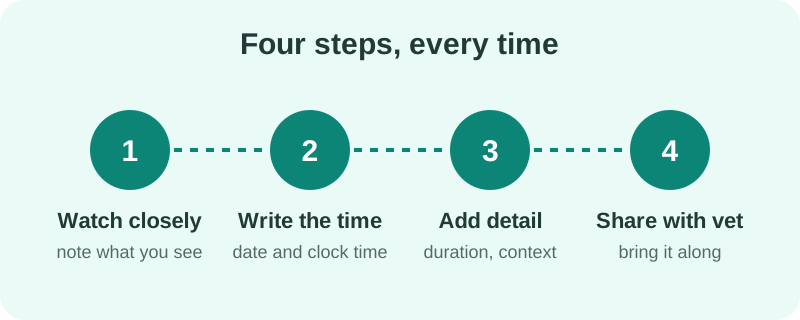
- Date and time — when you first noticed it, and when it noticeably changed.
- Plain description — what the symptom actually looked like, in your own words, not a guess at a diagnosis.
- Context — anything nearby in time: a new food, a new medication, a walk, a stressful day, a change in routine.
- How long it lasted — seconds, minutes, or still ongoing when you wrote the entry.
- Anything else unusual — appetite, thirst, energy level, litter box or bathroom habits.
A photo or short video is often worth more than a paragraph of description, especially for things like limping, coughing, or a skin change that's easy to see but hard to put into words. If you're already watching your pet's weight, the same logging habit pairs well with tracking the weight trend over time — both are about catching a slow change before it becomes a big one.
How detailed does each entry really need to be?
More detailed than a single word, less detailed than a full paragraph. "Vomited once, after dinner, looked like undigested food" tells your vet far more than "threw up," without taking more than a few seconds to write. Resist the urge to self-diagnose in the entry — write what you observed, and let the interpretation happen at the appointment.
Entries don't need to be formal. A running note on your phone, a line in a notebook by the door, or a dedicated log in an app all work, as long as you actually use it in the moment instead of trying to reconstruct the week later.
How do you log something sudden, like a seizure or a collapse?
Sudden events need a faster, more structured version of the same habit. Note the start time, how long it lasted, what your pet's body did, and how they seemed afterward — details that are easy to lose once the moment has passed and everyone's relief kicks in.
For a full breakdown of what to record during and after an episode, see how to track dog seizures. The same structure — time, duration, what happened, what came after — works for any sudden, dramatic symptom, not just seizures.
What's the most common mistake when logging symptoms?
The most common mistake is logging too late and too vaguely — a single line added the night before the appointment, written from memory, that says something like "been a bit off lately." That's better than nothing, but it loses almost everything that would actually help your vet narrow things down.
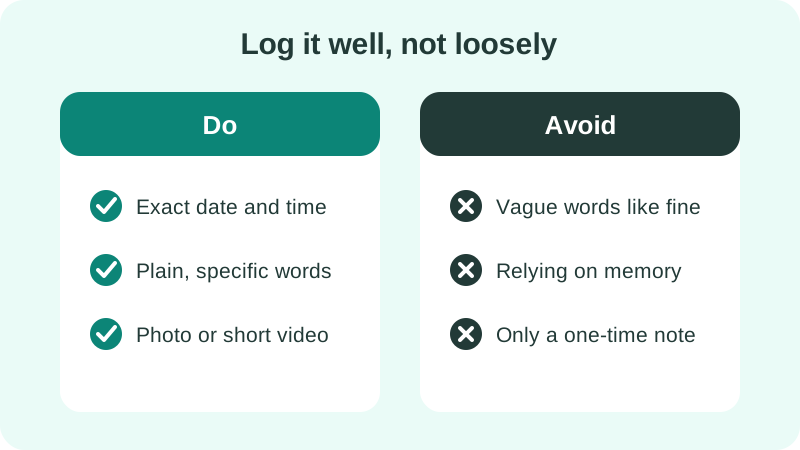
The fix is logging close to the moment it happens, even if it's just two lines on your phone. You can always add detail later; you can't recover a timeline you never wrote down in the first place.
How do you bring the log to the vet visit?
However you keep the log, bring it in a form your vet can actually read during the appointment — not a scroll through weeks of text messages to yourself. A clean, dated list, printed or on your phone, removes the guesswork of "when did this start again?"
This is also a good moment to pull in the rest of your pet's health record — current medications, recent vaccines, last known weight — rather than handing over the symptom alone. See how to keep your pet's health records organized for the bigger picture, and a full vet visit checklist for everything else worth bringing along.
PET-A keeps a per-pet log of symptoms, weight, medications and vet visits in one place, local-first and with no account required, and lets you export the whole history as PDF or CSV before an appointment.
When should a symptom go straight to the vet instead of the log?
Some symptoms are worth a call before you finish writing anything down: difficulty breathing, repeated vomiting, a swollen abdomen, collapse, or anything that seems severe or sudden. If you're unsure whether a cat's symptoms warrant a visit, this guide to signs a cat needs to see a vet walks through the warning signs to watch for. When in doubt, call — a log is for building a picture over time, not for deciding whether today's symptom can wait.
Once a symptom has been checked out, the log doesn't stop being useful. It becomes the record you compare future changes against, the same way a senior pet care checklist uses a running history to catch slow changes that a single visit would miss.
Frequently asked questions
What's the most important thing to include in a pet symptom log?
The date and time you first noticed the symptom, plus a plain description of what you actually saw — not a guess at what's wrong. Context like a new food, medication, or stressful event near the same time also helps your veterinarian spot a pattern.
Should I log symptoms even if they seem minor?
Yes. Minor symptoms logged early often turn out to be the most useful part of the record, because they show exactly when a change began. A string of small notes over weeks can reveal a pattern that a single vet visit wouldn't catch.
How do I log a sudden symptom like a seizure?
Note the start time, how long it lasted, what your pet's body did, and how they behaved afterward, as soon as it's safe to do so. A first seizure, a seizure that doesn't stop, or repeated seizures close together needs an immediate call to your veterinarian.
Do I need a special app to log pet symptoms?
No — a notebook or phone notes app works. A dedicated tool like PET-A just makes it easier to keep symptoms next to medications, weight and vet visits for one or more pets, and to export the history as PDF or CSV before an appointment.
How often should I update a pet's symptom log?
Update it whenever something changes, not on a fixed schedule — a new symptom, a symptom getting better or worse, or a symptom disappearing are all worth a line. For ongoing issues, a quick weekly check that nothing's been missed also helps.