Home › Blog › How to Track Dog Seizures (and What to Log Each Time)
How to Track Dog Seizures (and What to Log Each Time)
Last updated: October 10, 2026

A practical guide to logging a dog's seizures — what to record, how to respond in the moment, and how a written pattern helps your veterinarian make decisions.
Quick answer
To track dog seizures, log the date, start time, duration, what happened before and after, and any recovery changes for every episode. A written pattern — not memory — is what helps your veterinarian judge whether treatment is working.
Key takeaways
- Record date, time, duration, and before/after behavior for every seizure
- Time the seizure the moment it starts — don't rely on an estimate afterward
- Note recovery: confusion, pacing, appetite, how long it took to seem normal
- Review the pattern before each vet visit, not just when something feels different
- Contact your vet promptly for a first seizure, a long one, or seizures in a cluster
If your dog has had a seizure, here's how to track dog seizures so you and your vet can see the full picture: write down the date, start time, duration, and what happened right before and after. A simple log turns scattered memories into a pattern your veterinarian can actually use.
This is general information, not veterinary advice. A first-ever seizure, a change in how seizures look, or a change in frequency or recovery is something to discuss with your veterinarian promptly.
What should you record when your dog has a seizure?
Five pieces of information matter most: the date and exact start time, how long it lasted, what your dog was doing right before it started, what the seizure itself looked like, and how long recovery took afterward.
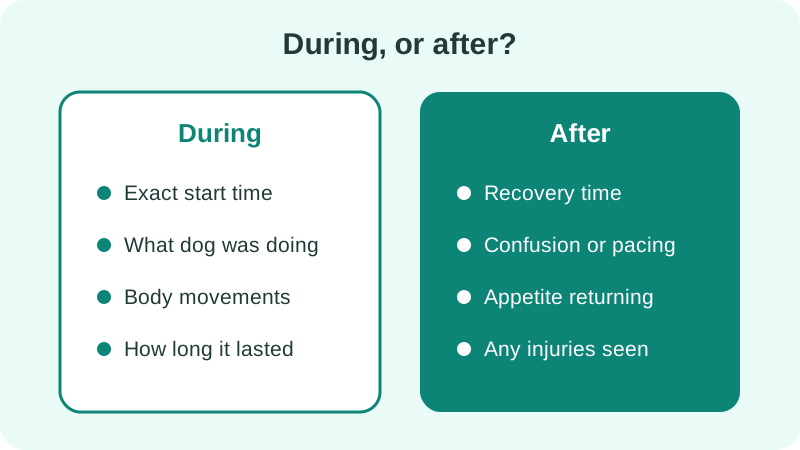
Beyond those five, a few context notes help a pattern emerge over time:
- Possible triggers — stress, a missed meal, poor sleep, a new environment, or nothing obvious at all.
- Medication timing — whether any dose was given on schedule, late, or missed that day.
- What the seizure looked like — whole-body, one side, just the face, loss of consciousness or not.
- Anything unusual beforehand — some dogs show restlessness, clinginess, or odd behavior minutes before an episode starts.
What should you do during and after a seizure?
Staying calm and keeping your dog safe comes first; recording the details comes right after, not instead of it.
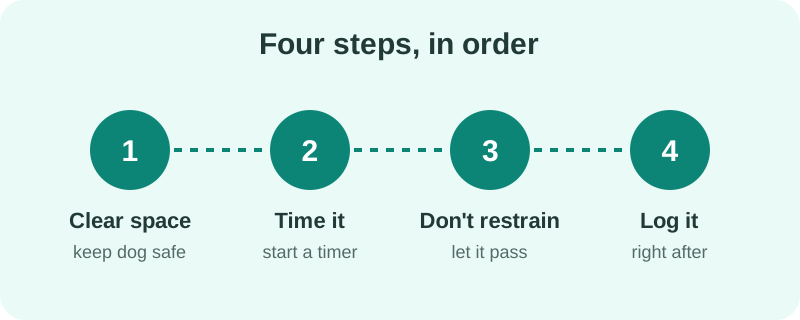
- Move anything nearby your dog could knock into or fall against, but don't try to hold or restrain them.
- Start timing the moment you notice it begin, even just by glancing at a clock.
- Stay close and speak calmly — your voice doesn't stop a seizure, but it helps you both once it passes.
- Once it's over, give your dog quiet space to recover, and write or record what you saw as soon as you can.
Afterward, check that your dog can stand, see, and respond to you normally again. Some grogginess or unsteady walking is common for a while; note roughly how long it took before your dog seemed back to themselves.
How do you turn seizure notes into a record your vet can use?
A single seizure is a data point. A string of them, written the same way each time, is a pattern — and a pattern is what actually helps your veterinarian decide whether a medication, a dose, or a diagnostic next step makes sense.
| Method | Good for | Where it falls down |
|---|---|---|
| Memory alone | Nothing, really | Dates and durations blur together within weeks |
| Paper notebook | A quick note right after it happens | Easy to misplace before a vet visit; hard to share |
| Notes app on your phone | Fast entry, always in your pocket | No structure, so trends are hard to spot later |
| A dedicated health-record app | Consistent fields every time, plus a shareable history | Takes a minute to set up the first entry |
Whatever you use, the fields that matter should stay the same every time: date, start time, duration, triggers, what it looked like, and recovery. Keeping all of your dog's health records organized this way pays off well beyond seizures — it's the same habit that makes vaccine and weight history useful too.
When you're building the record toward a vet visit, bring the whole log, not just the most recent episode. A vet visit checklist for dogs is worth preparing alongside it, so the seizure history isn't the only thing you remember to mention.
How often should you review the pattern, and when is it an emergency?
Look back over the log before every vet visit, and any time a seizure seems different from the ones before it — longer, closer together, or recovery taking noticeably longer than usual.
If your dog is on anti-seizure medication, the timing of each dose matters just as much as the seizure log itself, since a late or missed dose is often the first thing worth checking against a new episode. Keeping track of your dog's medications on a fixed schedule, logged the same way as the seizures, makes that connection visible instead of guessed at.
Outside of emergencies, the log itself does quiet, steady work: it turns "I think they've been more frequent lately" into an answer you can actually see, written down, dated, and ready to hand to your vet. That's the real value of tracking — not just remembering one bad night, but seeing the shape of all of them together.
PET-A keeps a private, local-first record for each pet — seizures, medications, vaccines and weight all in one place, with no account required. Log an episode in a minute, export the whole history as a PDF or CSV before a vet visit, and keep one pet free forever or add unlimited pets with Premium.
Frequently asked questions
What's the single most useful thing to record during a dog seizure?
The start time, timed the moment it begins. Everything else — duration, what the body did, how recovery went — is easier to remember accurately once you know you also have an exact time anchor to check against later.
Should I film my dog's seizures?
A short video, if you can safely grab your phone without delaying anything else, is genuinely useful — it shows your veterinarian exactly what the movements looked like, which is hard to describe precisely from memory alone.
How often should I review my dog's seizure log?
Look at the pattern before every vet visit, and any time you notice seizures seem closer together or different. A log makes a slow change in frequency or severity visible much sooner than relying on memory.
Is it normal for my dog to seem confused after a seizure?
Some period of disorientation, pacing, or unsteadiness afterward is common, but how long it lasts and how it changes over time is worth tracking and mentioning to your veterinarian rather than assuming it's always fine.
When should I treat a seizure as an emergency?
A first-ever seizure, one that goes on unusually long, or repeated seizures without your dog fully recovering in between are reasons to contact your veterinarian or an emergency clinic right away rather than waiting.