Home › Blog › Dog Weight Log Template: What to Track and How
Dog Weight Log Template: What to Track and How
Last updated: October 11, 2026

This article explains what columns belong in a dog weight log template, how to weigh consistently, and how to turn the log into a trend worth sharing with a vet.
Quick answer
A dog weight log template just needs the date, the weight, how you weighed your dog, a quick body condition check, and short notes — logged the same way each time. Paper, a spreadsheet, or an app all work; consistency is what matters.
Key takeaways
- A dog weight log template needs five columns: date, weight, method, body condition, notes.
- Same scale, same time of day, same conditions each time keeps numbers comparable.
- A trend over months matters more than any single weigh-in.
- Paper, spreadsheet, or app all work — consistency is what makes the log useful.
- Bring the full log, not just today's number, to your dog's vet visit.
A dog weight log template just needs five things: the date, the weight, the method you used, a quick body condition check, and anything else worth noting. Fill it in the same way every time and a single number turns into a trend you can actually read.
What should a dog weight log template include?
The point of a dog weight log is less about any one entry and more about the pattern across many entries, so the columns should make that pattern easy to see later. A good set of dog weight log columns is short on purpose — long enough to be useful, short enough that you'll actually fill it in.
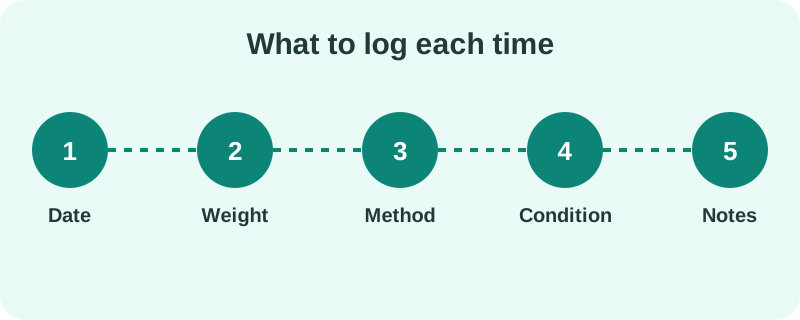
Notes is the column people skip and later wish they hadn't. A new food, a change in exercise, a course of medication, a dip in appetite — any of these next to a weight entry turns a mystery swing into something explainable. If you're already tracking medications for your dog, keeping that log next to the weight log makes the notes column almost write itself.
How do you get an accurate weigh-in every time?
A template only works if the numbers in it are comparable to each other, which means the weighing method has to stay the same every time, not just the columns on the page.
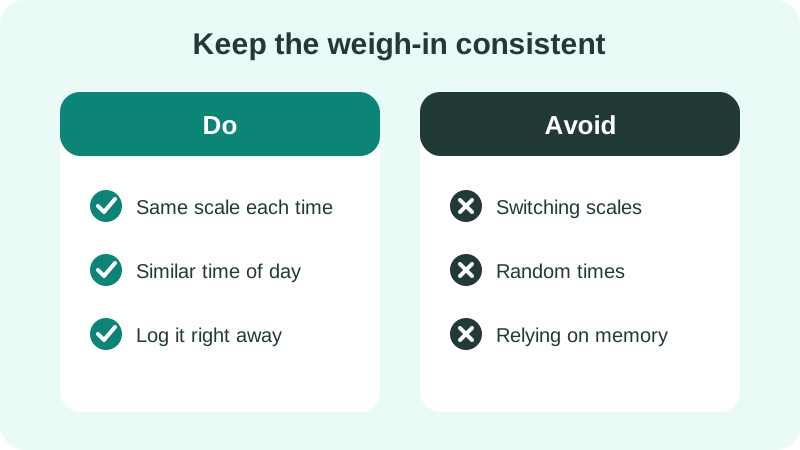
For a large dog, a flat pet or platform scale is usually easiest. For a small dog, the hold-and-subtract method works well: weigh yourself alone, then weigh yourself holding your dog, and subtract the first number from the second. Whichever method you pick, note it in the log — mixing a bathroom scale one month and a vet clinic scale the next can make a flat trend look like a real change when it isn't.
Paper, spreadsheet, or app — which works best for a dog weight chart?
All three can hold the same five columns. The difference is what happens after you type in a number: whether you get a chart, a reminder, and an easy way to share it, or just a list.
| Format | Good for | Where it falls down |
|---|---|---|
| Printed dog weight chart | A visible record taped near the scale | No automatic trend line, easy to lose a page |
| Spreadsheet | Flexible columns, a chart if you build one | You set reminders yourself; nothing nudges you |
| A dedicated app | Automatic trend, reminders, easy export | You enter a weigh-in schedule once, up front |
If you want something closer to a free dog weight tracker template without building one yourself, an app that logs weight alongside the rest of a dog's health record tends to go further than a standalone chart. PET-A logs weigh-ins and shows the weight trend at a glance, right next to medications, vaccines and vet visits, with one pet free forever and a 7-day free trial for unlimited pets on Premium. Records stay local-first, with no account required, and export to PDF or CSV when you need to hand the history to someone else. See also how to track your pet's weight at home and why the trend matters for more on reading that trend.
How often should you log your dog's weight?
A healthy adult dog on a stable diet doesn't need daily weigh-ins — every month or two is usually plenty to catch a slow drift. Puppies grow fast enough that more frequent checks confirm healthy growth, and senior dogs, overweight or underweight dogs, and dogs on a long-term treatment plan are often weighed monthly, or as often as a veterinarian suggests. How often should I weigh my dog? goes through this by life stage in more detail, and a monthly weigh-in fits naturally into a senior pet care checklist alongside other routine checks.
Whatever frequency you settle on, write it into the schedule rather than relying on remembering. A log with gaps of several months is much harder to read than one with steady, evenly spaced entries.
What should you do with the log once you have it?
A log is most useful at two moments: when you're deciding whether a change is worth mentioning, and when you're actually at the vet's office. On its own, a single weigh-in tells you almost nothing. A string of entries sliding steadily in one direction tells you a lot, and it's the kind of pattern that's easy to miss day to day but obvious once it's written down.
Bring the whole log to appointments, not just the most recent number — a vet visit checklist for dogs is a good place to include it alongside any other health records. If the trend points down and you're also noticing other changes, signs of weight loss in dogs covers what else is worth watching for. There's no single number that marks "too much" change for every dog, since a healthy weight is individual — so any noticeable or unexplained shift, especially a sudden one, is worth a call to your veterinarian rather than something to self-diagnose from a chart.
PET-A is a health-record and reminder tool, not a substitute for professional veterinary advice, but it's built to make the record part effortless — log a weigh-in in a few seconds, see the trend build automatically, and export it whenever your dog's next check-up calls for it.
Sources
Frequently asked questions
What columns should a dog weight log template have?
At minimum: the date, the weight, how you weighed your dog (scale or hold-and-subtract), a quick body condition check, and a notes column for diet, exercise or appetite changes. Those five columns are enough to turn a list of numbers into a readable trend over time.
How often should I fill in a dog weight log?
For a healthy adult dog, every month or two is usually enough. Puppies, seniors, overweight or underweight dogs, and dogs on long-term treatment are often weighed more often — monthly or as your veterinarian suggests — since their weight is more likely to shift.
Can I use a spreadsheet instead of an app for a dog weight log?
Yes. A spreadsheet works fine for recording numbers, though you'll need to build your own chart to see the trend and set your own reminders to fill it in. An app that does both automatically saves a step, but the format matters less than using it consistently.
What counts as a meaningful change on a dog weight log?
There's no single number that applies to every dog, since a healthy weight is individual. A steady drift up or down over several entries is what's worth noticing. Any noticeable or unexplained weight change is worth mentioning to your veterinarian rather than guessing at the cause.
Should I log body condition as well as weight?
Yes. Weight alone can hide a lot — two dogs at the same weight can look very different. A quick body condition check (can you feel the ribs easily, is there a visible waist from above) logged alongside the number gives a fuller picture than weight by itself.