Home › Blog › How to Share Pet Care With Family
How to Share Pet Care With Family
Last updated: October 8, 2026

A practical guide to splitting pet-care duties among family members using a shared, always-current record instead of memory or guesswork.
Quick answer
The best way to share pet care with family is to put every pet's medications, vaccines and vet visits in one shared record everyone can check and log to, instead of relying on texts or memory.
Key takeaways
- A shared record beats group texts for coordinating pet care
- Log each dose or task the moment it happens, not later
- Give every caregiver the same view of what's due and what's done
- Assign one person as the backup check for busy weeks
- Keep vaccine and vet history in one place everyone can reach
The most reliable way to share pet care with family is to stop relying on memory or a group chat and instead keep one shared record of medications, vaccines, weight and vet visits that anyone can check before they act. Whoever's home that day always knows what's already been done and what's still due.
That matters because pet care usually isn't one person's job for long. A partner takes over on a work trip, a teenager handles the evening feeding, a parent or neighbor steps in for a sitter. Each handoff is a chance for something to slip — a dose given twice, a vet reminder nobody saw, a vaccine that quietly lapses because everyone assumed someone else booked it.
Why does sharing pet care with family get complicated?
It's rarely about anyone being careless. It's that the information lives in the wrong place — in one person's head, in a text thread that scrolls away, or on a sticky note that moves with the dog's leash. The moment more than one person is responsible, "I thought you did it" becomes the most common failure mode in pet care.
Two problems show up again and again. First, nobody has the same picture at the same time — one person knows the dog had an allergy flare last month, another doesn't. Second, there's no record of what actually happened, only what someone remembers happening. Both are solved the same way: a single place everyone looks at and updates, instead of several people each holding a piece of the puzzle.
What's the easiest way to split up pet care duties?
Start by writing down what actually needs doing for your pet — medications, flea or heartworm prevention, upcoming vaccines, vet visits, regular weigh-ins — and then assign ownership, not just tasks for today. One clear system beats a well-meaning rotation that nobody fully remembers.
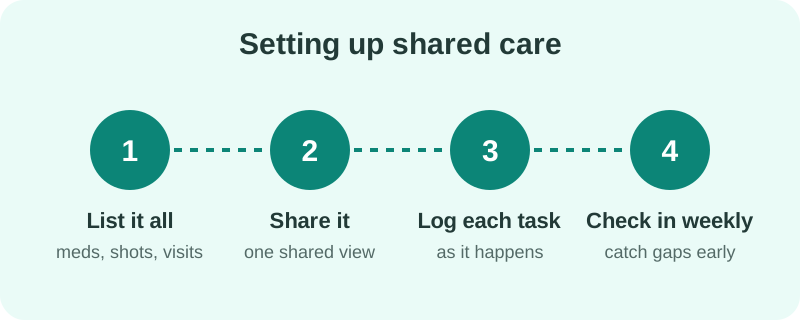
In practice, that means one person doesn't need to be the permanent "pet parent on duty." Instead, everyone pulls from the same source: a medication schedule that's always current, not whoever last remembered to mention it. If your household has more than one pet, the same idea scales — a combined view across all of them keeps the morning routine from turning into a guessing game about who's due for what.
How do you keep everyone on the same page about medications and vet visits?
The habit that makes shared care work is logging the moment something happens, not hours later. If a dose gets given at 7am and logged at 7am, anyone checking at noon knows for certain it was done. If it only lives in someone's memory, the next person has no way to tell "done" from "probably done."
The same goes for vaccines and vet visits. Knowing what shots are due and when only helps if that due date is somewhere everyone can see it, not buried in one person's calendar app. A rabies booster or a core vaccine due date is easy to miss when only one family member has ever looked at it.
What should every caregiver know at a glance?
Whoever's stepping in — a partner, a grown child home for the weekend, a sitter — needs a short, current picture, not the full history. A good shared view covers the basics without requiring a conversation first.
| What to share | Why it matters to a new caregiver |
|---|---|
| Current medications and times | Avoids doubled or skipped doses |
| Upcoming vaccines or booster due dates | Nothing quietly lapses while care rotates |
| Recent weight trend | A new caregiver can spot if something looks off |
| Last vet visit and any notes | Context for anything unusual they notice |
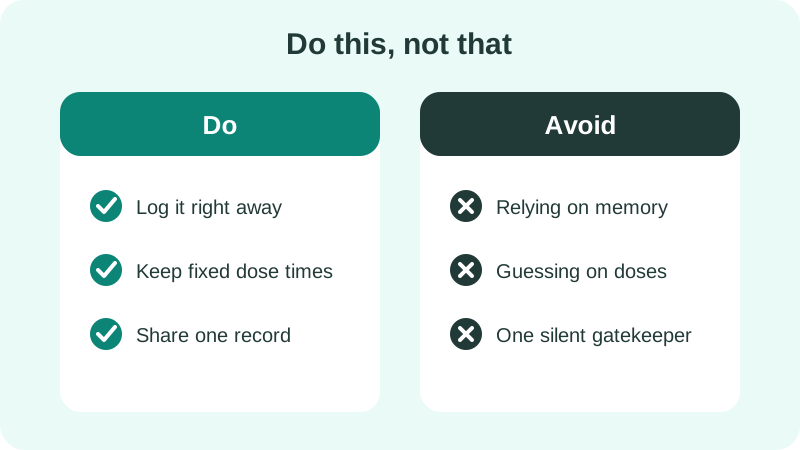
This is also where it helps to write down more than just medications. Keeping the full health record organized — not just today's dose but the whole history — means a new caregiver, or a vet filling in for your regular one, isn't starting from zero. And if remembering exact times is the sticking point for your household, building a steady reminder habit solves that half of the problem on its own.
How do you hand care off smoothly when you're away?
Before a trip, resist the urge to explain everything verbally. Write it down, or better, make sure it's already written down somewhere permanent. A sitter or relative who can open one shared record and see exactly what's due, what was last given, and what the pet's normal weight and behavior look like will make better decisions than someone working from a rushed verbal handoff at the door.
If anything looks off while you're away — appetite, energy, an unexpected weight change — that's a conversation for your veterinarian, not a guess made over text. PET-A is a health-record and reminder tool, not a substitute for professional veterinary advice, but having the history on hand makes it much easier to describe what changed and when.
PET-A keeps every pet's medications, vaccines, weight and vet visits in one local-first place, with editable multi-dose schedules so fixed times are easy to set and follow. It's free for one pet forever, with a Premium tier and a 7-day free trial for households tracking unlimited pets.
Sources
Frequently asked questions
What's the simplest way to share pet care with family?
Keep one shared, up-to-date record of medications, vaccines and vet visits that every caregiver can see and update. A group text works for a day or two, but it has no memory — a shared log does.
How do you avoid a pet getting double-dosed when two people share care?
Log each dose the moment it's given, so anyone checking can see it's already done. Fixed dose times also help, since 'already given this morning' is easier to confirm than 'given sometime today.'
Who should be responsible for vet visits when care is split?
One person doesn't have to handle every visit, but someone should own the calendar — booking appointments and confirming they happened. A shared record makes it easy to hand that job off without losing history.
What should a new caregiver, like a pet sitter, see first?
The current medication list with times, any allergies or conditions, and the most recent weight and vet visit. That's enough for someone stepping in to act with confidence, not guesswork.
Does sharing pet care work for multiple pets in one household?
Yes — keep a separate profile for each pet with its own schedule, then look at one combined view for what's due today across all of them. That keeps individual detail without losing the household overview.