Home › Blog › How to Give a Dog Liquid Medicine (Without a Fight)
How to Give a Dog Liquid Medicine (Without a Fight)
Last updated: October 7, 2026

A step-by-step guide to giving a dog liquid medicine with an oral syringe, handling refusal, and keeping multi-dose schedules on track.
Quick answer
To give a dog liquid medicine, draw the dose into an oral syringe, aim it at the cheek pouch instead of the throat, and dispense slowly with the head held level so your dog can swallow comfortably.
Key takeaways
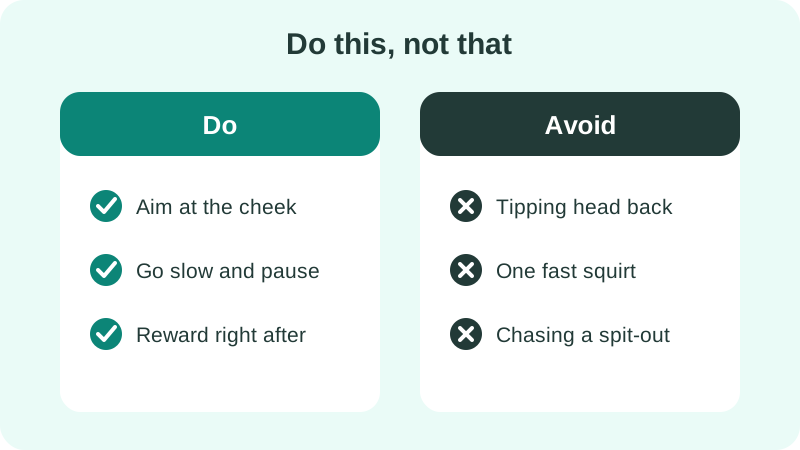
- Aim the oral syringe at the cheek pouch, not straight down the throat
- Keep your dog's head level, not tipped back, to make swallowing easier
- Dispense slowly — rushing causes spit-back and coughing
- Fix dose times for every treatment so multi-dose schedules stay consistent
- Set refill reminders a few days before a liquid bottle runs out
Wondering how to give a dog liquid medicine without a mess or a fight? Use an oral syringe aimed at the cheek pouch, not straight down the throat, and dispense slowly while your dog's head stays level.
This is general information, not veterinary advice. Follow the dose and timing your veterinarian prescribed, and call them with any question about a specific medication or what to do if your dog won't take it.
What's the best way to give a dog liquid medicine?
Most liquid medicines come with their own oral syringe, and that's the tool to use — not a spoon, which spills, and not an eyedropper, which is harder to aim. The goal is to land the dose in the cheek pouch, the small pocket between the back teeth and the inside of the cheek, so your dog can swallow it naturally instead of gagging on a direct squirt toward the throat.
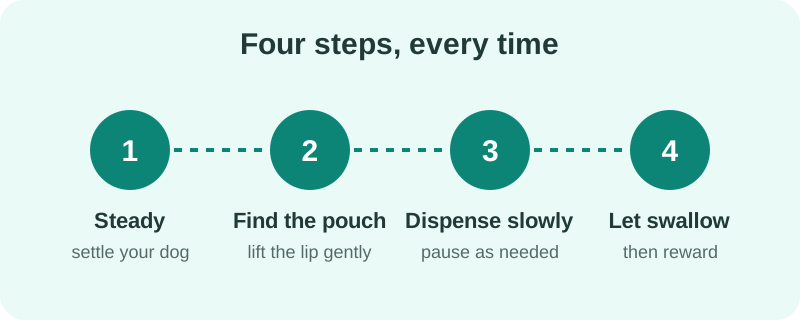
- Draw up the full dose in the oral syringe and have a small treat ready for afterward.
- Settle your dog somewhere steady — sitting against your legs, or a small dog in your lap.
- Gently lift the lip at the side of the mouth to find the cheek pouch.
- Slide the syringe tip just inside that pocket, angled toward the back of the mouth.
- Dispense slowly, pausing if your dog needs to swallow or pulls away mid-dose.
- Keep the head level rather than tipped back, and let the jaw close naturally.
For a toy breed or puppy, the same technique applies at a smaller scale: a gentler grip, a shorter syringe tip, and more frequent short pauses. For a large, strong dog, having a second person hold and reassure while you dose makes the whole process quicker and calmer for everyone.
What if my dog won't take liquid medicine and spits it out?
Some dogs clamp their jaw, shake their head, or let the liquid dribble straight back out. Before trying again, check a few things: whether the dose actually reached the cheek pouch rather than the front of the mouth, whether it went in too fast, and whether your dog was tense rather than settled when you started.
If spitting out keeps happening, ask your veterinarian or pharmacist whether the medicine can be mixed into a small amount of food or a treat instead. Some liquids lose effectiveness mixed with food or need to be given on an empty stomach, so don't assume this is fine without checking first. A calmer, quieter room also helps more than people expect — the same patience that works for pilling a cat applies just as well when giving a dog medicine by mouth.
How do you handle multiple daily doses or combination medicines?
Liquid medicines are often dosed more than once a day, sometimes alongside a pill or a topical treatment. The easiest way to stay consistent is to fix the clock times for every dose and keep them steady, rather than dosing "whenever you remember." Keeping track of your dog's medications in one place, instead of juggling several bottles and a mental note, is what actually prevents a missed or doubled dose.
If your dog is on more than one medication, editable multi-dose schedules help, because real treatment plans change — a course ends, a dose adjusts, a new medication gets added partway through. Setting fixed times you'll actually remember matters just as much as the syringe technique itself.
How do you avoid running out of liquid medicine mid-course?
Liquid medications come in a fixed-volume bottle, and it's easy to misjudge how many doses are left until the bottle is suddenly empty partway through treatment. A refill reminder set a few days ahead of the last dose gives you time to call the vet or pharmacy without a gap. Setting up refill reminders is a small habit that heads off a surprisingly common problem, and it pairs well with a regular prevention schedule if your dog is on more than one ongoing product.
What should you do if your dog won't take it or seems off afterward?
If your dog consistently refuses a liquid medicine, or seems unusually drowsy, agitated, or unwell after a dose, that's worth a call to your veterinarian rather than repeating the same struggle on your own. The same goes for any unexpected reaction — vomiting right after dosing, unusual drooling, or a dose you suspect didn't go down at all. A written log of exactly when each dose was given helps your vet see the full picture, whether that's over the phone or at your next vet visit.
PET-A keeps a per-pet record of every dose, with editable multi-dose schedules and a reminder for each one, so you can see at a glance what was given and when — private, local-first, and free for one pet.
Frequently asked questions
What's the best tool for giving a dog liquid medicine?
The oral syringe that usually comes with the medicine is the best tool. It lets you measure the exact dose and aim it precisely at the cheek pouch, unlike a spoon or dropper, which are harder to control and more likely to spill or miss the mouth entirely.
Why does my dog spit out liquid medicine?
Spitting usually means the dose went in too fast, landed at the front of the mouth instead of the cheek pouch, or your dog is tense. Slow down, aim further back along the cheek, and keep the handling calm and brief rather than prolonged.
Can I mix liquid medicine into my dog's food?
Sometimes, but not always — some liquids lose effectiveness mixed with food or should be given on an empty stomach. Ask your veterinarian or pharmacist before hiding a dose in food or a treat, especially for a new medication.
Is it safe to tip my dog's head back to give liquid medicine?
No. Tipping the head straight back makes swallowing harder and raises the risk of liquid going toward the windpipe instead of down the throat. Keep the head level or only slightly raised, and let your dog swallow at its own pace.
What if my dog won't take liquid medicine at all?
If refusal is consistent, or your dog seems unwell after a dose, call your veterinarian rather than forcing it repeatedly. They may suggest a different formulation, a food-based approach, or a technique adjustment suited to your specific dog and medication.